Composite Versus Wood Decking: Which Fits?
A deck should make it easier to enjoy your property, not create another demanding weekend chore. For Northern Virginia homeowners weighing composite versus wood decking , the right choice comes down to more than color or initial price. It affects how the deck feels underfoot in July, how it handles wet leaves and winter moisture, how much maintenance it needs, and what it costs over the years.
Neither material is automatically best for every home. A well-built pressure-treated wood deck can be a practical, attractive investment. A properly installed composite deck can deliver years of low-maintenance use with a more predictable appearance. The better question is which one fits your budget, design goals, and willingness to maintain it.
Composite Versus Wood Decking: The Core Difference
Wood decking is a natural material, commonly pressure-treated pine, cedar, or hardwood. Pressure-treated lumber is the most common choice for structural framing and budget-conscious deck surfaces because it is widely available and designed to resist rot and insect damage. Cedar and hardwoods offer a more refined natural appearance but typically cost more and still need consistent care.
Composite decking is a manufactured board made from a blend of recycled wood fibers and plastic, often protected by a durable outer cap. It is designed to resist fading, staining, moisture absorption, splintering, and insect damage better than traditional wood boards. Most composite products are installed over a wood or metal framing system, so the hidden structure still requires professional attention to drainage, flashing, fasteners, and code requirements.
That distinction matters. Choosing composite boards does not make framing details optional. A deck performs well when the entire assembly is planned and built correctly, from the ledger connection at the house to the footings below grade.
Upfront Cost and Long-Term Value
Wood usually wins on initial material cost, especially when using pressure-treated pine. For a homeowner replacing an aging deck on a limited budget, wood can make a project possible sooner. It also allows for straightforward repairs: a damaged board can often be replaced without matching an entire proprietary product line.
Composite decking generally has a higher upfront price. The boards, hidden fastener systems, matching fascia, and specialty trim can all increase the initial investment. However, it can reduce ongoing ownership costs because it does not require routine staining or sealing. For homeowners planning to stay in their home for many years, that lower maintenance burden may justify the added cost.
Value is not only a spreadsheet calculation. Consider the time spent cleaning, sanding, replacing split boards, and applying finish. If you would rather spend a Saturday hosting family than maintaining the deck, composite may offer better practical value even with its higher initial price.
For a property being prepared for sale or a rental renovation where budget and speed are the priority, a clean, properly finished pressure-treated deck can be the sensible choice. The key is setting realistic expectations about future maintenance rather than treating wood as a one-time expense.
Maintenance: Where Composite Has an Advantage
A wood deck needs regular attention to retain its appearance and protect the boards. At minimum, it should be cleaned periodically to remove dirt, mildew, leaves, and debris. Depending on exposure and product choice, it may need staining or sealing every few years. Areas beneath planters, outdoor rugs, grills, and furniture deserve extra attention because trapped moisture can accelerate deterioration.
Composite decking needs cleaning too, but its maintenance is simpler. A seasonal wash with appropriate cleaner, water, and a soft brush is often enough to remove pollen, dirt, and surface buildup. Capped composite boards are especially helpful around outdoor dining areas because they are more resistant to common spills than unfinished wood.
Low maintenance does not mean no maintenance. Debris should still be cleared from board gaps, especially in heavily shaded yards. Good airflow and drainage remain essential. If leaves and standing water are allowed to collect, any deck surface can develop staining or mildew.
Appearance, Texture, and Design Flexibility
Wood has an appeal that manufactured materials cannot completely duplicate. Every board has its own grain pattern, knots, and color variation. Freshly finished cedar or hardwood can create a warm, traditional look that works especially well with historic homes, wooded lots, and natural stone details.
The trade-off is that wood changes over time. Sunlight, rain, foot traffic, and seasonal movement can alter its color and texture. That weathered appearance can be attractive to some homeowners, but maintaining a consistent color requires ongoing work.
Composite products now come in a wide range of colors, grain patterns, board widths, and edge profiles. They work well for contemporary exteriors, low-maintenance entertaining spaces, and coordinated designs with picture-frame borders, stairs, railings, and lighting. Their color tends to remain more consistent from season to season, although no outdoor product is completely immune to the effects of sun and weather.
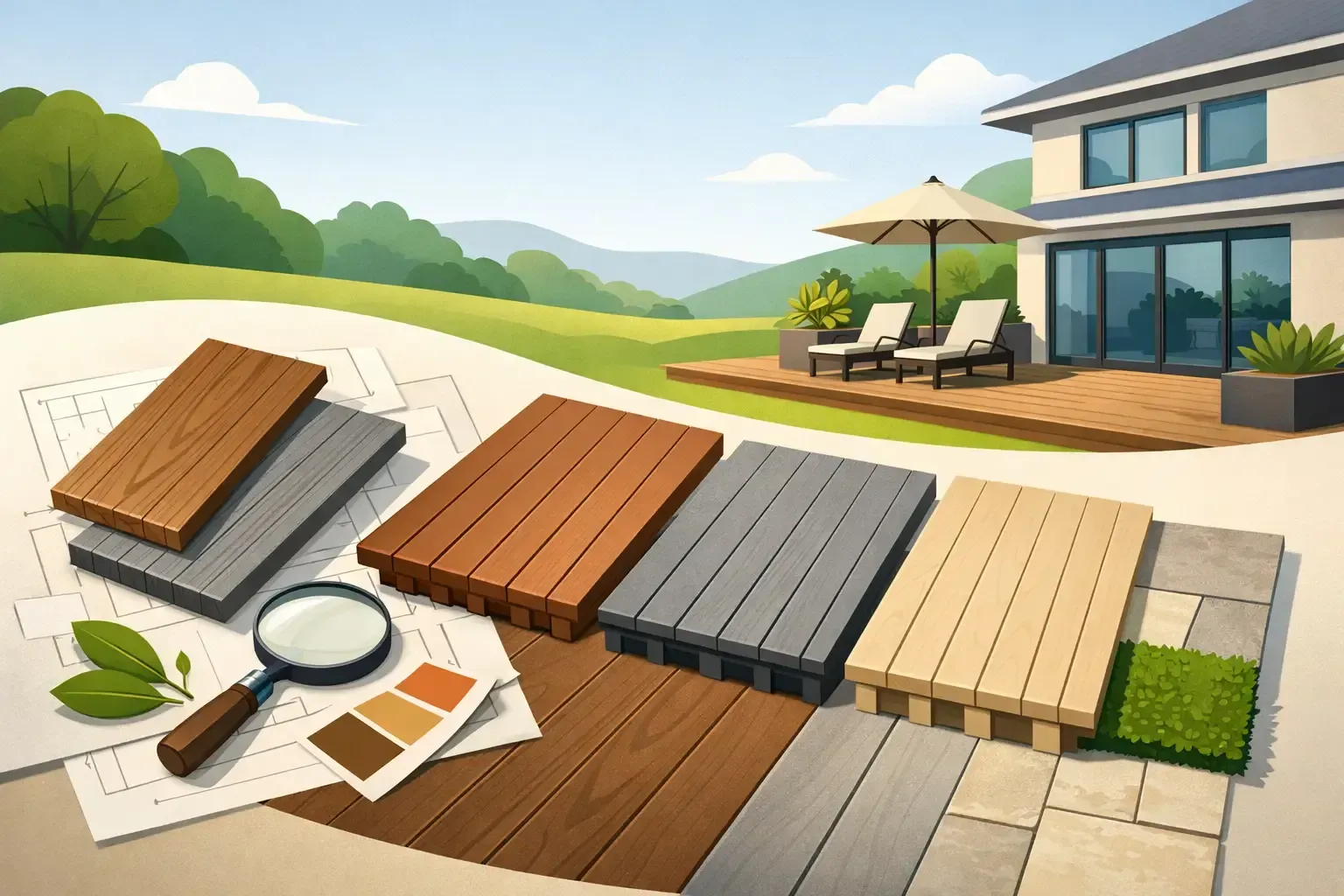
Before deciding, view full-size samples outside at different times of day. A board that looks perfect under showroom lighting may appear much warmer, darker, or cooler against your siding and landscaping. This is also the time to consider railing style, stair layout, privacy screening, and how the deck connects to patios or existing hardscape.
Comfort and Daily Use in Northern Virginia
Decks in Springfield, Fairfax, Arlington, and nearby communities face humid summers, heavy rain, freeze-thaw cycles, and abundant tree cover. Material selection should account for those conditions.
Composite boards typically resist moisture better than wood, which makes them a strong option for shaded yards and locations near pools or damp landscaping. They are also less likely to splinter, a meaningful benefit for families with children, pets, or frequent barefoot use.
However, some composite colors can become noticeably hot in direct summer sun, particularly darker tones. Wood can also heat up, but the surface temperature of a composite board should be considered carefully on an open, south-facing deck. Lighter colors, shade structures, pergolas, and thoughtful furniture placement can make a substantial difference.
Wood can feel more forgiving and natural underfoot, especially when it is maintained well. But as boards age, splinters, checking, popped fasteners, and cupping become more likely. Regular inspection is part of safe wood-deck ownership.
Durability Depends on Installation, Not Just the Boards
Homeowners often compare board warranties without giving equal attention to construction details. Yet a premium deck surface installed over poor framing will not deliver premium performance.
A durable deck begins with properly sized footings, sound structural framing, corrosion-resistant connectors, correct joist spacing, and a properly flashed ledger where the deck attaches to the home. Composite boards may require closer joist spacing than wood, depending on the product and installation direction. Stairs, guardrails, and handrails must also meet applicable safety requirements.
Drainage deserves special attention. Water should move away from the house, and framing should have room to dry. On elevated decks, access for future inspections and repairs should be considered during the design stage. These choices protect both the deck and the home’s exterior structure.
At Coronado Construction & Remodeling LLC, deck planning is approached as a construction project, not simply a board replacement. The surface material matters, but safe structural work, clear scope, and reliable completion matter just as much.
How to Make the Right Choice
Choose composite if you want a consistent finished appearance, minimal routine maintenance, strong moisture resistance, and a deck you expect to enjoy for the long term. It is often a good fit for busy households, larger entertaining areas, and homeowners who prefer to invest more upfront in exchange for fewer maintenance tasks later.
Choose wood if you value authentic natural grain, need to control the initial project cost, or prefer the flexibility to sand, stain, and change the deck’s color over time. Pressure-treated lumber can be an excellent material when it is correctly installed, maintained, and protected from persistent moisture.
There is also a practical middle ground. Many successful projects use pressure-treated lumber for the structural framing and composite for the visible walking surface. That combination can balance structural value with a low-maintenance finish.
Before selecting a material, assess how the deck will actually be used. Think about sun exposure, tree cover, furniture, cooking areas, foot traffic, future additions, and how long you expect to own the home. A deck that suits your daily life and is built with careful structural details will serve your property better than one chosen on price alone.